
A Complete Guide and Relationship Inventory
Part 1.
Relationships thrive when two people understand one another, communicate openly, and intentionally build a life together. While every partnership is unique, many couples eventually begin asking whether their relationship naturally functions according to strengths rather than tradition.
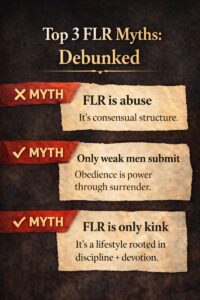
One relationship framework that has received growing attention is the Female-Led Relationship (FLR). Although the phrase is becoming more familiar, it is also one of the most misunderstood relationship concepts online.
Some people assume that a Female-Led Relationship is defined by control or rigid authority. Others mistakenly believe it is based on stereotypes or unequal treatment. Neither assumption reflects the philosophy embraced by Belvedere Life.
A healthy Female-Led Relationship begins with a much simpler question:
Which partner naturally provides the leadership that best serves the relationship?
For some couples, that answer is the woman. For others, responsibilities remain largely shared. Some relationships naturally evolve over time as careers change, children arrive, or life presents new challenges.
The objective is never to fit into a predetermined model.
The objective is to create a relationship where each person’s strengths contribute to the long-term well-being of the partnership.
That philosophy forms the foundation of intentional living.
Rather than assigning responsibilities according to tradition or social expectations, intentional couples evaluate who communicates most effectively, who remains calm under pressure, who plans ahead, who naturally accepts responsibility, and who consistently acts in the best interests of the relationship.
Many couples discover they have already developed these patterns without ever using the term “Female-Led Relationship.” Others realize that introducing additional structure and clearer expectations helps reduce unnecessary conflict and increases confidence in everyday decision-making.
Neither outcome is inherently better than the other.
The healthiest relationship is the one that reflects the personalities, values, and goals of the people within it.
What Is a Female-Led Relationship?
A Female-Led Relationship is an intentional relationship framework in which a woman naturally assumes greater responsibility for leadership while both partners actively contribute to the success of the relationship through mutual respect, communication, accountability, and consent.
Leadership should never be confused with superiority.
Instead, leadership reflects responsibility.
A healthy leader considers the needs of the relationship before personal preferences. Decisions are guided by long-term stability, thoughtful communication, and a willingness to accept responsibility when mistakes occur.
Likewise, the devoted partner is not passive.
Supporting shared goals requires consistency, trustworthiness, emotional maturity, and a genuine commitment to helping the relationship flourish.
Strong partnerships recognize that leadership and support are equally valuable.
One role provides direction.
The other strengthens execution.
Together they create balance.
Because every couple is different, there is no universal formula for how responsibilities should be divided.
Some couples prefer collaborative decision-making in nearly every area of life.
Others naturally discover that one partner consistently excels at long-term planning, financial management, conflict resolution, or organization. In these relationships, allowing that individual to guide certain aspects of the partnership often brings greater clarity and reduces unnecessary tension.
Healthy Female-Led Relationships therefore exist on a spectrum.
Some involve only modest shifts in responsibility.
Others incorporate more formal relationship agreements and routines.
Neither approach is inherently more successful than the other.
Success depends on trust, communication, shared purpose, and a genuine commitment to each other’s well-being.
Emotional Leadership Matters More Than Titles
One of the most valuable lessons couples discover is that leadership is demonstrated through daily actions rather than labels.
People naturally follow those who demonstrate consistency.
They trust those who remain calm during difficult conversations.
They respect individuals who accept responsibility for mistakes instead of assigning blame.
These qualities represent emotional leadership.
They create psychological safety within a relationship by making expectations predictable and encouraging honest communication.
At Belvedere Life, we believe emotional leadership is far more important than authority.
A partner who consistently listens, communicates clearly, considers the long-term impact of decisions, and protects the health of the relationship demonstrates leadership regardless of personality style.
That is why this inventory focuses less on opinions and more on observable behaviors.
The goal is to identify the patterns that already exist within your relationship and to encourage meaningful conversations about how those patterns influence your partnership.
Why This Inventory Is Different
Many online relationship quizzes are designed primarily for entertainment.
They rely on simplified questions and produce quick labels that rarely reflect the complexity of real relationships.
This inventory takes a different approach.
Instead of asking what you believe about leadership, it encourages you to examine how your relationship actually functions.
It explores personal strengths, communication habits, historical patterns, emotional maturity, accountability, decision-making, and shared responsibilities.
Most importantly, it asks both partners to complete the inventory independently before comparing answers.
That simple step often reveals meaningful insights.
Some couples discover they already agree about their strengths.
Others uncover differences in perception that become valuable starting points for deeper conversations.
Neither outcome is a failure.
Both represent opportunities to better understand one another and to build a relationship that reflects your shared values rather than assumptions.
____________________________________________________________________________________
Part 2.
The Belvedere Life Relationship Inventory
Section 1: Personal Strengths
Healthy relationships begin with self-awareness.
Before evaluating the relationship itself, consider your own strengths. Leadership and support both require qualities that contribute to the well-being of the partnership.
Rate each statement from 1 (Strongly Disagree) to 5 (Strongly Agree).
Leadership and Character
- I remain calm during stressful situations.
- I make thoughtful decisions without rushing.
- Others naturally ask for my advice.
- I enjoy organizing people or projects.
- I communicate expectations clearly.
- I usually finish what I begin.
- I enjoy helping others succeed.
- I accept responsibility when I make mistakes.
- I naturally think ahead rather than reacting only to today.
- People generally trust my judgment.
- I encourage rather than criticize.
- I enjoy creating order from complexity.
- I am comfortable making difficult decisions.
- I protect relationships during conflict.
- I am dependable.
These statements encourage reflection on qualities that often contribute to healthy emotional leadership within any relationship.
Section 2: Personal Challenges
Every person has areas where growth is possible.
Honest reflection creates opportunities for improvement, while avoiding challenges often prevents meaningful progress.
Again, rate each statement from 1 to 5.
Consider whether you:
- Avoid uncomfortable conversations
- Procrastinate
- Struggle with consistency
- Become defensive when corrected
- Frequently second-guess yourself
- Dislike making decisions
- React emotionally before thinking
- Feel overwhelmed by responsibility
- Struggle to maintain routines
- Avoid accountability
- Expect others to solve problems
- Lose focus easily
- Have difficulty saying no
- Delay important decisions
- Become discouraged when circumstances become difficult
Everyone will recognize some of these tendencies.
The objective is not perfection.
The objective is awareness.
Section 3: Looking Back
Past behavior often provides a clearer picture than future intentions.
Discuss your relationship history honestly.
Ask questions such as:
- Which partner has generally made stronger financial decisions?
- Who plans major events more effectively?
- Who remains calmer during disagreements?
- Who notices potential problems earlier?
- Who consistently follows through on commitments?
- Who has demonstrated dependable long-term judgment?
- Who organizes daily life most effectively?
- Who accepts responsibility first after conflict?
- Who encourages personal growth in the other?
- Who naturally keeps the relationship moving forward?
Rather than debating isolated situations, consider whether these patterns have remained consistent over the course of your relationship.
Consistency is often a stronger indicator than occasional success.
Section 4: Where Does Each Person Thrive?
Healthy relationships recognize that different people excel in different areas.
Discuss which partner naturally demonstrates greater ability in areas such as:
- Budgeting
- Long-term planning
- Scheduling
- Household organization
- Parenting
- Conflict resolution
- Emotional support
- Goal setting
- Creating routines
- Accountability
- Communication
- Managing stress
- Building trust
- Leading difficult conversations
For every answer, ask three follow-up questions:
- Why do we believe this?
- Can we identify three real examples?
- Has this pattern remained consistent throughout our relationship?
Specific examples often reveal patterns that general opinions overlook.
Section 5: Leadership Qualities
Healthy leadership serves the relationship rather than personal pride.
Consider which partner most consistently demonstrates the following qualities:
- Sees the bigger picture
- Thinks ahead
- Makes difficult decisions thoughtfully
- Protects the relationship during conflict
- Encourages accountability
- Creates stability
- Inspires confidence
- Earns respect through consistency
- Helps others become better
- Maintains emotional composure
- Handles responsibility well
- Establishes healthy boundaries
- Accepts responsibility without blaming others
- Leads by personal example
Leadership is not determined by titles.
It is reflected through consistent behavior over time.
Section 6: Supportive Partnership Qualities
Strong relationships also depend upon someone who willingly contributes to shared goals.
Supporting the relationship is not a lesser role.
It requires consistency, reliability, humility, and a genuine commitment to helping the partnership succeed.
Discuss which partner naturally:
- Appreciates clear expectations
- Enjoys helping another succeed
- Values accountability
- Appreciates routines
- Cooperates well
- Takes pride in keeping commitments
- Welcomes constructive feedback
- Values mutual respect over winning arguments
- Finds satisfaction in helping the relationship flourish
Support strengthens leadership.
Leadership provides direction.
Together they create stability.
______________________________________________
Part 3.
Understanding Your Results
Once both partners have completed the inventory independently, set aside uninterrupted time to compare your responses. Resist the temptation to focus immediately on differences. Instead, begin by identifying where your answers align.
Shared answers often reveal strengths that have quietly supported your relationship for years. Areas of disagreement can be even more valuable because they uncover perceptions that may never have been discussed openly.
Remember, this inventory is designed to encourage conversation rather than produce a label.
No relationship fits perfectly into a predetermined model, and no single score determines whether a Female-Led Relationship is appropriate. Instead, your responses provide a snapshot of how your relationship functions today and where it may continue to grow.
What Your Results May Suggest
Mostly Shared Strengths
If your answers indicate that both partners consistently demonstrate leadership qualities, emotional maturity, and dependable communication, your relationship may naturally thrive with collaborative leadership.
Many successful couples divide responsibilities according to individual strengths rather than assigning one person primary responsibility for every decision.
That does not mean a formal Female-Led Relationship would be inappropriate. Instead, it suggests your relationship already benefits from mutual trust, communication, and flexibility.
The important question becomes:
Are your current roles serving the relationship well?
If the answer is yes, intentional conversations and clearly defined expectations may be all that is needed to continue strengthening your partnership.
One Partner Consistently Demonstrates Leadership
Some couples discover that one partner repeatedly demonstrates stronger abilities in areas such as:
- Long-term planning
- Organization
- Financial management
- Emotional composure
- Accountability
- Conflict resolution
- Consistency
- Strategic decision-making
When these qualities consistently belong to one partner, allowing that individual to assume greater leadership responsibility may create additional clarity within the relationship.
Healthy leadership is never about control.
It is about stewardship.
The partner in a leadership role accepts responsibility for protecting the health of the relationship while remaining open to feedback, maintaining respect, and making decisions that serve both individuals.
A successful Female-Led Relationship is built upon mutual consent, trust, and shared purpose rather than personal authority.
One Partner Naturally Thrives as a Devoted Partner
Supporting the relationship is often misunderstood.
Many people assume support represents passivity.
In healthy intentional partnerships, the opposite is true.
A devoted partner actively contributes to the success of the relationship through consistency, reliability, encouragement, accountability, and daily actions that strengthen shared goals.
Support requires maturity.
It requires discipline.
It requires trust.
Many relationships flourish because one partner genuinely enjoys helping the partnership function smoothly while the other naturally excels at providing direction.
Neither contribution is more valuable.
They are complementary.
Strong leadership depends upon dependable support.
Strong support depends upon trustworthy leadership.
Areas That May Need Additional Attention
Some inventories reveal opportunities for growth rather than clearly defined leadership patterns.
Perhaps both partners avoid difficult conversations.
Perhaps accountability is inconsistent.
Perhaps communication breaks down during conflict.
If that describes your relationship, changing the structure alone is unlikely to resolve those challenges.
Before introducing additional expectations, focus first on strengthening the foundation.
Healthy relationships are built through:
- Honest communication
- Mutual respect
- Emotional maturity
- Consistent accountability
- Shared goals
- Trust developed over time
Structure should support these qualities, not replace them.
Frequently Asked Questions
Can a Female-Led Relationship work for every couple?
No. Every relationship is unique. Some couples naturally prefer shared leadership, while others benefit from one partner assuming greater responsibility in specific areas. The healthiest approach is the one both partners freely choose and consistently support.
Does an FLR mean one partner has all the power?
No.
Healthy Female-Led Relationships are based on consent, communication, mutual respect, and shared purpose. Leadership carries additional responsibility, not greater personal value.
Can leadership change over time?
Absolutely.
Relationships evolve.
Career changes, health, parenting, retirement, and personal growth can all influence how responsibilities are shared. Healthy couples regularly revisit expectations and adjust when appropriate.
Is supporting the relationship a lesser role?
Not at all.
Strong partnerships depend upon dependable support just as much as thoughtful leadership. Both contributions are essential to long-term stability.
What if our answers are very different?
Different answers often create the most meaningful conversations.
Instead of asking who is “right,” ask why each person answered differently and identify real-life examples together.
How often should we repeat this inventory?
Belvedere Life recommends completing the inventory annually or after significant life changes.
Relationships continue to develop, and your answers may change as your partnership grows.
Continue the Conversation
Completing this inventory is only the beginning.
Healthy relationships grow through consistent conversations, thoughtful reflection, and a willingness to adapt as life changes.
Whether your relationship naturally develops into a Female-Led Relationship or another intentional partnership, the goal remains unchanged.
Create a relationship where:
- Trust becomes stronger over time.
- Communication remains honest.
- Responsibilities reflect each person’s strengths.
- Accountability is embraced rather than avoided.
- Both partners flourish together.
Those principles matter far more than any title.
Continue Learning at Belvedere Life
If this inventory encouraged meaningful conversations, continue building your relationship with additional resources from Belvedere Life.
We recommend exploring:
- What Is a Female-Led Relationship? for an introduction to intentional relationship dynamics.
- FLR Foundations to understand the principles that support healthy emotional leadership.
- FLR Relationship Structure for practical guidance on defining responsibilities and expectations.
- The Belvedere Life Journal for educational articles that encourage trust, communication, accountability, and mutual respect.
- Beyond Love: The Relationship Depth Project for guided exercises designed to help couples strengthen their connection through intentional conversations.
Every relationship is unique.
There is no single model that guarantees success.
What matters is creating a partnership built upon trust, communication, emotional maturity, accountability, and a genuine commitment to one another.
Your strongest relationship is built one intentional conversation at a time.
Visit BelvedereLife.org to explore practical resources that help couples build relationships defined by clarity, purpose, and mutual respect.
Suggested Internal Links
- Home
- What Is FLR
- FLR Foundations
- FLR Relationship Structure
- Chastity & Commitment
- Domestic Discipline
- Feminisation & Identity
- Journal
- Shop
- Beyond Love: The Relationship Depth Project
- Before Divorce: 25 Questions Every Couple Should Ask Before Ending Their Marriage